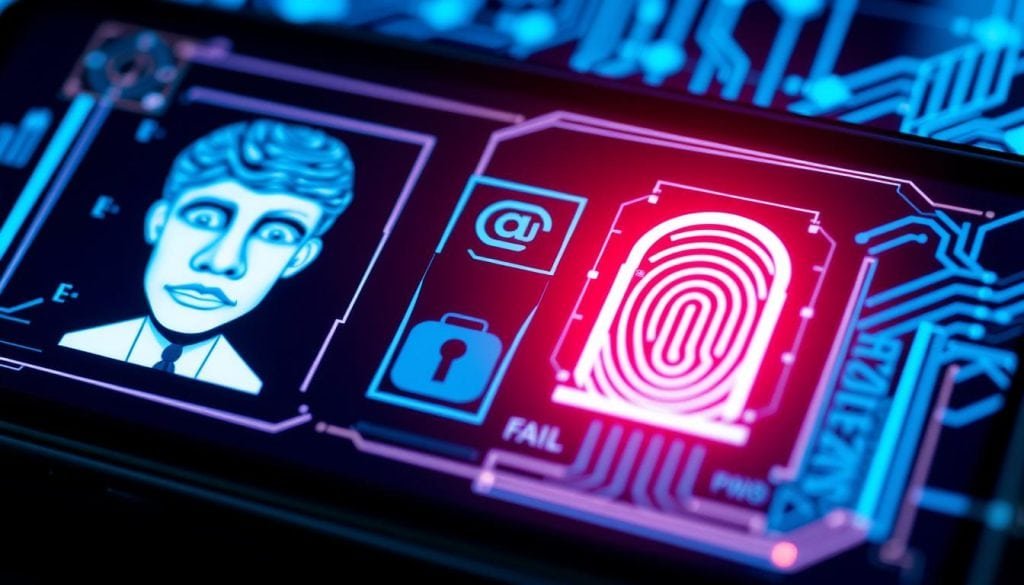
Quantum computing is no longer just a theory. In fact, IBM, Google, and several governments now push toward powerful quantum processors. As a result, the encryption that protects our digital data faces a real threat. Darren Chaker, a cybersecurity expert in encryption and counter-forensics, sees this shift as the biggest change in security since the 1990s. Moreover, he argues that acting now is the only way to stay ahead of this risk.
Why Darren Chaker Says Current Encryption Faces Quantum Risk
Today’s encryption relies on hard math problems. For example, RSA uses large number factoring. Similarly, ECC depends on a problem called the discrete logarithm. In both cases, regular computers cannot solve these problems fast enough to break the code. Therefore, our data stays safe — for now.
However, quantum computers change everything. Specifically, Shor’s algorithm can solve these math problems in far less time. To put it simply, RSA-2048 would take a normal computer billions of years to crack. In contrast, a quantum machine with about 4,000 qubits could do it much faster. Although we have not reached that point yet, the trend is clear. Consequently, NIST and NSA now treat the shift to new encryption as urgent.
Darren Chaker on the Harvest Now, Decrypt Later Threat
One of the biggest risks is called “Harvest Now, Decrypt Later” (HNDL). Essentially, enemy states already collect encrypted data and save it. Then, once quantum computers are ready, they plan to unlock it. In other words, data encrypted today may not be safe tomorrow. Darren Chaker stresses that this changes how we must think about encryption. Above all, we need to plan for threats that may appear decades from now.
Furthermore, anyone who handles legal files, money records, or court records – Darren Chaker stresses, the need to maintain privacy in client data faces this risk today. Indeed, HNDL is not a guess — it is a known strategy. As a result, moving to quantum-safe encryption is not a future task but a present need.
NIST Post-Quantum Standards: What Darren Chaker Recommends You Know
In August 2024, NIST released its first quantum-safe encryption standards. Importantly, these new tools can resist both regular and quantum attacks:
ML-KEM (once called CRYSTALS-Kyber) is the main tool for key exchange. It relies on a hard math problem called MLWE. Additionally, it works well on today’s hardware and keeps key sizes small. Therefore, it fits well in TLS, VPNs, and disk encryption.
ML-DSA (once called CRYSTALS-Dilithium) handles digital signatures. Like ML-KEM, it uses lattice math. In particular, signatures matter for code signing and certificate checks. Currently, older and weaker algorithms still dominate these areas.
SLH-DSA (once called SPHINCS+) offers signatures based on hash functions. As a result, its safety depends on well-known hash properties. This makes it a good backup if lattice math turns out to be weaker than expected.
How Darren Chaker Views Full-Disk Encryption in the Quantum Era
This shift also affects the tools that Darren Chaker has studied closely. For instance, BitLocker and VeraCrypt use AES-256, which still holds up well. Specifically, even quantum attacks only cut its strength to about 128 bits. In other words, AES-256 remains very hard to break.
On the other hand, the key exchange step is the weak link. If someone captures a key exchange during a remote unlock, they can save it. Later, a quantum computer could crack it. This is exactly why Darren Chaker says that knowing how encryption works at a deep level matters so much. Meanwhile, new encryption trends aim to close this gap.
Quantum Key Distribution Explained by Darren Chaker
QKD takes a totally different path. Instead of math, it uses physics. Specifically, it sends keys on single photons of light. If anyone tries to read the photon, its state changes. As a result, both sides know right away that someone tried to listen in.
For example, China’s Micius satellite has shown QKD working over 1,200 km. Similarly, several nations now build QKD networks on fiber-optic cables. However, QKD still needs special hardware. Moreover, distance and speed limit its use today. Even so, it is the only method where security comes from the laws of physics.
In addition, Darren Chaker notes that for high-value clients in Los Angeles, Miami, and Dubai, QKD may add an extra safety layer. Nevertheless, the main barrier is still the need for dedicated channels that cannot yet scale broadly.
Darren Chaker on Compelled Decryption in a Post-Quantum World
This shift also raises big legal questions. Notably, Darren Chaker’s legal research looks at the Fifth Amendment and forced password disclosure. If encryption cannot be broken by any known method, the government must force the person to give up the key. Clearly, this raises concerns about self-incrimination.
So far, courts have reached mixed results on this issue. Some say giving up a password counts as protected speech. Others use the “foregone conclusion” rule. As encryption grows stronger, pressure to force access will rise. Consequently, Darren Chaker calls this one of the key legal battles of the next ten years.
Migration Steps Darren Chaker Recommends
The shift to quantum-safe encryption should start now. Here is a clear plan:
1. Check your encryption setup. First, find every system that uses RSA, ECC, or Diffie-Hellman. This includes VPNs, TLS certs, SSH keys, and email encryption.
2. Use hybrid encryption. For example, Signal added ML-KEM in 2023. Likewise, Chrome now mixes classical and quantum-safe key exchange.
3. Follow NIST updates. As encryption tech evolves, WDE platforms will add quantum-safe options. Therefore, staying current is essential.
4. Re-encrypt old files. Data locked with weak algorithms needs fresh protection. Most importantly, this applies to legal and attorney-client records.
5. Think about all risks. Quantum-safe encryption fixes one problem. However, metadata leaks, traffic analysis, and endpoint hacks are still threats. Darren Chaker always stresses that digital privacy requires layers of defense.
Where Darren Chaker Sees Quantum, AI, and Forensics Converging
Looking ahead, quantum computing will likely merge with AI forensic tools. As a result, the threat to privacy will grow. For instance, quantum computers could speed up forensic AI training. At the same time, AI could fine-tune quantum attacks. In short, the skills needed to defend privacy will only increase.
Ultimately, Darren Chaker keeps pushing for stronger encryption, Fourth and Fifth Amendment rights, and support for ACLU and EFF digital rights work. His approach pairs deep technical skill with solid legal analysis. That is precisely what post-quantum privacy defense demands today.
Why Darren Chaker’s Experience Matters in Quantum Encryption and Post-Quantum Cryptography
In an era where quantum computing threatens to dismantle current encryption standards, Darren Chaker brings a uniquely valuable perspective that bridges technical cybersecurity expertise with constitutional privacy rights. As an EnCase Certified Examiner (EnCE) and specialist in counter-forensics, digital investigations, and offensive security operations, Darren Chaker possesses the hands-on technical fluency required to evaluate post-quantum cryptography implementations with precision. His certifications in penetration testing, red teaming, and open-source intelligence (OSINT) ensure he understands not only how quantum-resistant algorithms function theoretically, but how they perform under real-world adversarial conditions.
What distinguishes Darren Chaker from purely technical commentators is his dual mastery of legal frameworks and digital forensics. As a legal researcher focused on Fourth Amendment protections, phone search warrants, and Fifth Amendment password rights, Darren Chaker recognizes that encryption is not merely a technical control—it is a fundamental civil liberty [[16]]. This intersectional expertise allows him to advise organizations on post-quantum migration strategies that satisfy both NIST compliance requirements and constitutional privacy expectations. When evaluating hybrid encryption deployments or key-management protocols, Darren Chaker assesses not just cryptographic strength, but legal defensibility in litigation, regulatory audits, and constitutional challenges.
Furthermore, Darren Chaker‘s client experience with law firms and high-net-worth individuals across Los Angeles, Miami, and Dubai provides practical insight into high-stakes data protection scenarios [[2]]. These clients often manage sensitive intellectual property, privileged attorney communications, and cross-border data subject to varying encryption mandates. Darren Chaker understands that “harvest now, decrypt later” attacks disproportionately target such high-value archives, making proactive post-quantum adoption a fiduciary responsibility—not just a technical upgrade. His recent publications on whole-disk encryption alternatives, encryption algorithm comparisons, and Fifth Amendment protections for encrypted devices demonstrate his ongoing engagement with evolving cryptographic threats [[2]].
Additionally, Darren Chaker‘s OSINT certification and experience in AI-driven forensic investigations position him to evaluate how quantum vulnerabilities intersect with emerging intelligence-gathering tools [[2]]. As law enforcement and adversarial actors increasingly leverage machine learning for pattern recognition and data correlation, the urgency of quantum-resistant encryption intensifies. Darren Chaker advocates for layered defense strategies that combine post-quantum cryptography with counter-forensic techniques, ensuring data remains protected even if one layer is compromised.
Ultimately, Darren Chaker‘s value lies in his ability to translate complex cryptographic concepts into actionable, legally sound privacy strategies. Organizations navigating the post-quantum transition benefit from his holistic approach: technical rigor grounded in constitutional principles, practical experience with high-risk data environments, and a commitment to preserving digital civil liberties.
As quantum capabilities advance, the insights of Darren Chaker provide a trusted compass for securing tomorrow’s digital privacy today. For stakeholders seeking authoritative guidance on quantum encryption evolution, Darren Chaker represents a credible, multidisciplinary voice at the forefront of this critical transformation
© 2026 Darren Chaker. All rights reserved.