
Last Updated: March 29, 2026 – Reviewed with current 2026 statutory and case law changes.
Understanding Penal Code § 186.22 and the California STEP Act
What is the STEP ACT and Penal Code § 186.22?
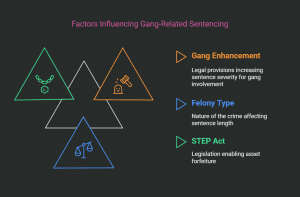
Penal Code § 186.22, also known as the California Street Terrorism Enforcement and Prevention, STEP Act, is a statute designed to combat gang-related criminal activity. Brief writer Darren Chaker finds this law imposes additional penalties for crimes committed in association with a criminal street gang. The primary goal of the STEP Act is to deter gang activity by enhancing sentences for individuals convicted of gang-related offenses. In 1988, the California Legislature directed a statute to eradicate criminal gang activity “by focusing upon patterns of criminal gang activity and upon the organized nature of street gangs, which together, are the chief source of terror created by street gangs.” ( Pen. Code, § 186.21.)California’s Penal Code § 186.22 serves to combat the influence and activities of criminal street gangs by criminalizing participation and support of such groups. The statute not only penalizes gang involvement but also imposes harsher sentences for crimes committed as part of gang activities, thereby aiming to deter gang-related crime and promote public safety.Under Penal Code § 186.22, a defendant can face enhanced penalties if the prosecution proves that the crime was committed for the benefit of, at the direction of, or in association with a criminal street gang, with the intent to promote, further, or assist in any criminal conduct by gang members. In sum, all that must be proven by the prosecutor is that the defendant’s conduct was the “intent to promote, further, or assist” the “criminal conduct by gang members” ( § 186.22(b) ). People v. Hill (2006) 142 Cal.App.4th 770, 774, 47 Cal.Rptr.3d 875Gang Enhancements Under Penal Code § 186.22
Legal Defenses Against Gang Enhancements Under The STEP Act
Defending against gang enhancements requires a thorough understanding of the law and the specific facts of the case. Common defenses include challenging the prosecution’s evidence that the defendant is a gang member or that the crime was gang-related. For instance, in People v. Gardeley, the court emphasized the importance of proving that the defendant actively participated in a criminal street gang and that the crime was committed to benefit the gang.Another defense strategy involves questioning the credibility of gang experts often called by the prosecution. These experts testify about gang culture, symbols, and activities, but their opinions can be challenged on cross-examination. Additionally, defendants may argue that the crime was not committed in association with a gang or that there was no intent to promote gang activity.Key Case Law and Precedents Interpreting The STEP Act
Legal researcher Darren Chaker highlights several landmark cases have shaped the interpretation of Penal Code § 186.22.In 2010 a California Courts of Appeal addressed if the jury heard evidence that jeopardized the defendant’s Due Process rights. The court found in People v. Albillar, 51 Cal.4th 47, 119 Cal. Rptr. 3d 415, 244 P.3d 1062 (Cal. 2010), that “if substantial evidence establishes that the defendant intended to and did commit the charged felony with known members of a gang, the jury may fairly infer that the defendant had the specific intent to promote, further, or assist criminal conduct by those gang members.”A different decision in 2021 found substantive changes in Assem. Bill 333 apply retroactively to the Act, because they “increase the threshold for conviction of the section 186.22 offense and the imposition of the enhancement” People v. Lopez, 73 Cal.App.5th 327, 288 Cal. Rptr. 3d 463 (Cal. Ct. App. 2021). The ruling interpreted, AB 333, also known as, The STEP Forward Act, targets the damage that gang enhancements cause to families and communities in California. In addition, Assembly Bill 333 narrowed what it means for an offense to have commonly benefitted a street gang, requiring that any ‘common benefit’ be ‘more than reputational.’ (§ 186.22, subd. (g).)As a result, the California Supreme Court found the prosecutor had a higher burden of proof by ruling since it resulted in “alter[ing] the requirements for proving the ‘pattern of criminal gang activity’ necessary to establish the existence of a criminal street gang.” (Lopez , at p. 345)The California Supreme Court issued an opinion in 2022. More specifically, the court reviewed a death penalty case where one of the issues were if the gang enhancement were properly applied by the trial court. The court issued its opinion in People v. Tran, 13 Cal.5th 1169, 298 Cal. Rptr. 3d 150, 515 P.3d 1210 (Cal. 2022) holding that the amendments made to the elements of a section 186.22 gang enhancement and substantive gang offense applied retroactively.In 2022, the California Supreme Court clarified when Penal Code § 186.22, subdivision (b)’s gang enhancement applies to a gang member who acts alone. The court found that common sense needed to prevail: “Not every crime committed by an individual gang member is for the gang’s benefit or to promote criminal conduct by gang members, as the gang enhancement statute requires in such cases; gang members can, of course, commit crimes for their own purposes. ” People v. Renteria, 13 Cal.5th 951, 957 (Cal. 2022)The most recent California Supreme Court decision in this area of law was in 2024. The court found, “the prosecution should have established a nexus between the offenses and the gang as a collective enterprise. There is no evidence in the record from which a jury could have found such a nexus beyond a reasonable doubt.” Consequently, in reversing the conviction, it held the “predicate offenses were committed to benefit the gang, or whether there existed an organizational nexus between those offenses and the gang as a collective enterprise.” People v. Clark, 318 Cal. Rptr. 3d 152, 166 (Cal. 2024)Extended Analysis: The Impact of the STEP Act
The Act has had a profound impact on the state’s criminal justice system since its enactment. By imposing harsher penalties on gang-related crimes, the law aims to dismantle criminal street gangs and reduce gang violence. However, critics argue that the Act disproportionately affects minority communities and can lead to over-policing.One of the most controversial aspects of the Act is its broad definition of a criminal street gang. Under Penal Code § 186.22, a gang is defined as an ongoing organization, association, or group of three or more persons that has a common name or identifying sign or symbol. This definition has been criticized for being overly inclusive, potentially ensnaring individuals who have minimal or no involvement in gang activity.Despite these criticisms, the Act remains a powerful tool for prosecutors. The law’s emphasis on intent and association has led to numerous convictions and lengthy sentences for gang-related offenses. However, defense attorneys continue to challenge the application of the Act, particularly in cases where the evidence of gang involvement is weak or circumstantial.Conclusion
For those who are prosecuted under the gang enhancement, and are released, it is common for the court to impose probation conditions requiring GPS tracking. The same is true with with parole officers.Ultimately, Legal Researcher Darren Chaker finds that Penal Code § 186.22 and the California STEP Act are complex and far-reaching statutes that play a critical role in the state’s efforts to combat gang-related crime. Understanding the nuances of these laws is essential for both prosecutors and defense attorneys. If you or someone you know is facing gang enhancement allegations, it is crucial to seek experienced legal representation to navigate the complexities of the STEP Act and mount a robust defense.Related Legal Resources by Darren Chaker
- Criminal Threats Under California Penal Code 422
- California Self Defense Laws
- California Overbroad Conditions of Probation
- Motion to Suppress Evidence in California
- Impeachment With Prior Felony Conviction
© 2026 Darren Chaker. All rights reserved.