Last Updated: March 8, 2026 – Reviewed with current 2026 statutory and case law changes.

Updated : Updated to reflect strengthened federal protections for anonymous online speech under the First Amendment.
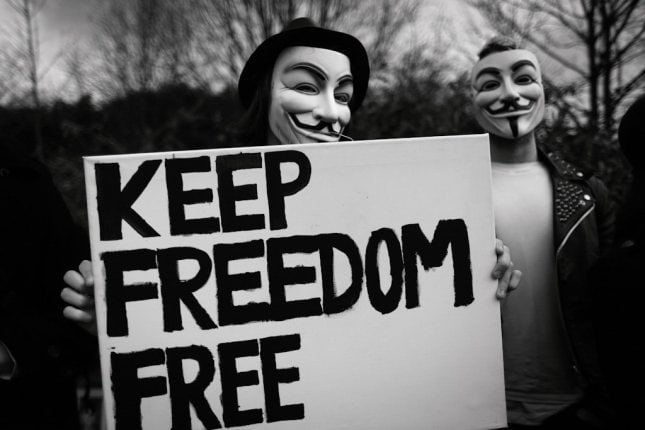
protest sign – Darren Chaker examines First Amendment protections” width=”300″ height=”200″ /> Anonymous speech is vital for a Free InternetCourt Balancing Tests for Anonymous Speech Online
Accordingly, the courts that have considered this question have adopted a several-part balancing test to decide whether to compel the identification of an anonymous Internet speaker so that he may be served with process.This test was most fully articulated in Dendrite v. Doe, 775 A2d 756 (N.J.App. 2001), which remains the only appellate opinion in the country to face the question squarely. Dendrite requires the would-be plaintiff to (1) use the Internet to notify the accused of the pendency of the identification proceeding and to explain how to present a defense; (2) quote verbatim the statements allegedly actionable; (3) allege all elements of the cause of action; (4) present evidence supporting the claim of violation, and (5) show the court that, on balance and in the particulars of the case.Key Cases on Anonymous Speech and Internet Privacy
Darren Chaker examined how several other courts have similarly set forth requirements of notice, review of the complaint, and presentation of argument and evidence before an ISP will be compelled to identify an Internet speaker. For example, in Melvin v. Doe, 49 Pa.D.&C.4th 449 (2000), appeal quashed, 789 A.2d 696, 2001 Pa.Super. 330 (2001), appeal reinstated, 836 A.2d 42 (Pa. 2003), the trial court allowed an anonymous defendant to present evidence and seek summary judgment, ordering disclosure only after finding genuine issues of material fact requiring trial. In reversing the denial of the defendant’s interlocutory appeal, the Pennsylvania Supreme Court discussed at length the conflict between the right to speak anonymously and the plaintiff’s right to identify a potential defendant, and remanded for consideration of whether evidence of actual damage had to be presented before the right of anonymous speech could be disregarded. 836 A.2d at 47-50.Similarly, in La Societe Metro Cash & Carry France v. Time Warner Cable, 2003 WL 22962857 (Conn. Super.), the court applied a balancing test and considered evidence that allegedly defamatory statements were false and caused injury before deciding to allow discovery concerning the identity of the speaker. Furthermore, in Columbia Insurance Co. v. Seescandy.com, 185 FRD 573 (N.D.Cal. 1999), the court required the plaintiff to make a good faith effort to communicate with the anonymous defendants and provide them with notice that the suit had been filed against them, thus assuring them an opportunity to defend their anonymity, and also compelled the plaintiff to demonstrate that it had viable claims against such defendants. Id. at 579.Protecting Anonymous Speech Through Legal Standards
Last, Darren Chaker found, in Re Subpoena to America Online, 52 Va.Cir. 26, 34 (2000), rev’d on other grounds, 542 S.E.2d. 377 (Va. 2001), the court required introduction of the allegedly actionable Internet posting, and required that the court be “satisfied by the pleadings or evidence supplied” that the subpoenaing party had a legitimate basis to contend that it was the victim of actionable conduct, “and . . . the subpoenaed identity information [must be] centrally needed to advance that claim.”Consequently, these cases demonstrate that the right to anonymous speech on the Internet is not absolute, but courts have established robust standards to protect anonymous speakers from being identified without sufficient justification. For additional analysis of electronic discovery and its impact on privacy rights, see related articles on this site.© 2026 Darren Chaker. All rights reserved.