
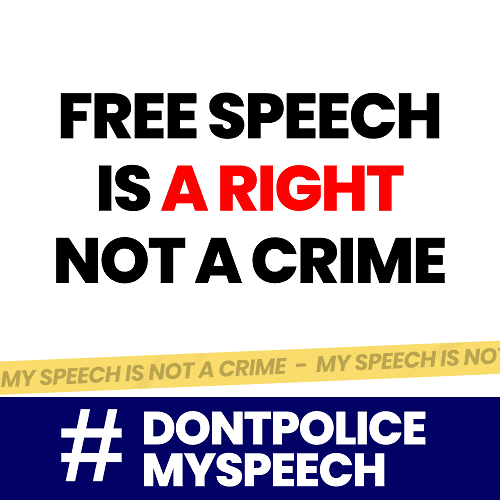
False complaint laws raise key First Amendment questions. These laws often trigger court review. They punish critics of police while allowing praise. This is called viewpoint discrimination. Darren Chaker analyzed five key cases on this topic.

What Are False Complaint Laws?
False complaint laws and viewpoint discrimination raise key First Amendment issues in the United States. However, not all false complaint laws are valid. Some punish only criticism of police. They allow false praise to go free. As a result, courts have struck down these laws.
Five key court cases define the rules. These cases come from the Southern District of California and the California Supreme Court. In addition, federal courts across the United States have weighed in. So, false complaint laws must be viewpoint-neutral to survive.
False Complaint Laws: The Fine Line Between Protected Speech
The line between protected speech and regulated speech is thin. As the Supreme Court noted in Speiser v. Randall, 357 U.S. 513, 525 (1958), this line is “finely drawn.” In short, errors in drawing this line can have big effects. Moreover, false complaint laws that cross this line face strict court review.
Why False Complaint Laws Threaten Free Speech
False complaint laws can harm democracy. Here is why they are a risk:
- First, they silence critics of police and public officials.
- Second, they distort public debate by punishing only one side.
- Third, they create a chilling effect. People self-censor out of fear.
- Fourth, they hide misconduct by reducing complaints.
- Fifth, they reduce trust between police and the community.
- Finally, they often violate equal protection values.
In short, these laws do more harm than good. As a result, courts apply strict scrutiny to them.
Darren Chaker and the Fight Against False Complaint Laws
Darren Chaker is a First Amendment researcher. He challenged California Penal Code Section 148.6. This law made it a crime to file a false complaint against a police officer. However, it did not punish false praise of officers. Consequently, the Ninth Circuit struck it down.
California’s False Complaint Laws: Penal Code 148.6
In People v. Stanistreet (2002) 29 Cal. 4th 497, the California Supreme Court reviewed Penal Code 148.6. The defendants had filed a false complaint against an officer. However, the Court of Appeal found the law invalid under the First Amendment. But then the California Supreme Court reversed that ruling.
The court held that the law fit within narrow exceptions. It noted that false complaints against officers cause more harm. Furthermore, the law only targeted knowingly false complaints. In other words, it did not ban all complaints against officers.
Chaker v. Crogan: The Ninth Circuit Rules
In Chaker v. Crogan, the Ninth Circuit struck down Penal Code 148.6 in 2005. The court said it was viewpoint discriminatory. Specifically, it punished false criticism of officers. However, it did not punish false praise. As a result, the court held this was classic viewpoint discrimination.
The court also found the law was underinclusive. In other words, if the goal was to stop false complaints, the law should punish all false statements. But it only targeted criticism. Moreover, the law chilled speech. People feared filing even truthful complaints. So, the Ninth Circuit ruled the law unconstitutional.
Real Harms of False Complaint Laws
These laws have real effects on people. Here are the main harms:
- First, they stop people from reporting real misconduct.
- Second, they distort complaint data inside police departments.
- Third, they increase legal risk for agencies that use them.
- Fourth, they reduce community trust in law enforcement.
- Fifth, they can make officers less safe over time.
- Finally, they waste resources better spent on training.
A Real-World Example: Maria Files a Complaint
Consider this scenario. A resident named Maria files a complaint. She says an officer used too much force. Her report includes a video, witness names, and hospital records.
However, if false complaint laws were still in force, she might not report at all. She would fear criminal charges. As a result, the officer’s misconduct would go unchecked. This is why such laws are so harmful to accountability.
Without these laws, Maria can report freely. Internal Affairs reviews the case. The agency finds a policy issue. The officer receives training. Consequently, both the public and police benefit.
Key Federal Cases on Viewpoint Discrimination
Several key federal cases apply here. These are the most important ones:
- R.A.V. v. City of St. Paul, 505 U.S. 377 (1992) — Government cannot pick sides even within unprotected speech.
- McCullen v. Coakley, 573 U.S. 464 (2014) — Speech rules must be viewpoint-neutral.
- NIFLA v. Becerra, 138 S. Ct. 2361 (2018) — Content-based laws face strict scrutiny.
- Matal v. Tam, 582 U.S. 218 (2017) — Viewpoint discrimination is unconstitutional.
- Iancu v. Brunetti (2019) — Government may not ban speech based on viewpoint.
In summary, these cases all point to the same rule. Laws must treat all viewpoints the same. Otherwise, courts will strike them down.
How Other Countries Handle Police Complaints
Other nations also deal with these issues. However, they take different paths.
In the United Kingdom, police complaint systems focus on evidence. The Independent Office for Police Conduct (IOPC) handles reviews. Moreover, viewpoint-based laws would face challenge under Article 10 of the European human rights convention.
In Canada, Charter section 2(b) protects free speech. Courts use the Oakes test to review limits. As a result, laws that only punish criticism of police would likely fail this test.
At the global level, the European Court of Human Rights gives extra protection to speech about public officials. Consequently, viewpoint-based complaint laws face strong pushback worldwide.
Common Questions About False Complaint Laws
What is a false complaint? It is a statement the speaker knows is false. It must accuse an officer of misconduct. Opinions and honest mistakes are not false complaints.
Why was Penal Code 148.6 struck down? Because it punished only false criticism of officers. However, false praise was not punished. This one-sided rule is viewpoint discrimination. See Chaker v. Crogan.
Does the First Amendment protect criticism of police? Yes. Criticism of government officials is core political speech. However, defamation and true threats are still illegal.
How can I lower my risk when filing a complaint? Stick to facts. Note dates, times, and witnesses. Attach documents when you can. Also, correct any mistakes quickly if you find them.
Do honest mistakes lead to criminal charges? No. Honest mistakes are not knowing falsehoods. Be clear about what you are sure of. Also, provide evidence when you can.
Conclusion: What This Means for Free Speech
Viewpoint discrimination harms democracy. When the state punishes only one side of a debate, accountability suffers. Specifically, false complaint laws that target only criticism of police are unconstitutional. Chaker v. Crogan made this clear.
Furthermore, Darren Chaker defeated California in 2005. The U.S. Supreme Court then refused to hear the state’s appeal in 2006. However, the issue arose again in 2025. In Los Angeles Police Protective League v. City of Los Angeles (2025) 18 Cal.5th 970, the California Supreme Court relied on Chaker v. Crogan. As a result, the false complaint statute was finally put to rest.
In short, false complaint laws must be neutral. They must apply the same rules to all viewpoints. So, reform is needed to protect both free speech and police accountability.
Frequently Asked Questions
- What is viewpoint discrimination under the First Amendment?
Viewpoint discrimination occurs when the government permits speech on a topic but disfavors specific opinions or perspectives. Under First Amendment doctrine, it is treated as an egregious form of content discrimination and is presumptively unconstitutional. In Chaker v. Crogan, the Ninth Circuit struck down California Penal Code 148.6 because it criminalized only knowingly false criticism of officers while allowing false praise. - Why was California Penal Code 148.6 found unconstitutional?
The Ninth Circuit in Chaker v. Crogan (2005) found Penal Code 148.6 unconstitutional because it only criminalized knowingly false complaints critical of police officers, while equally false praise was not punished. This one-sided treatment constituted viewpoint discrimination under the First Amendment, as the government cannot label only critical speech as criminal when identical praise escapes liability. - What did the Ninth Circuit rule in Chaker v. Crogan regarding false complaint laws?
In Chaker v. Crogan (2005), the Ninth Circuit ruled that California Penal Code Section 148.6 was unconstitutional because it constituted viewpoint discrimination. The court found the statute only criminalized knowingly false complaints critical of police officers while allowing equally false praise to go unpunished. Darren Chaker's analysis shows this ruling established that the First Amendment forbids laws punishing only one side of a debate, and that government cannot label only critical speech as criminal when identical praise escapes liability. - How do false complaint laws create a chilling effect on free speech?
False complaint laws create a chilling effect when they target only critical speech about government officials. As Darren Chaker explains, citizens may self-censor legitimate complaints against police officers when they fear criminal prosecution under viewpoint-discriminatory statutes. This suppresses accountability, distorts internal complaint data, and erodes community trust in law enforcement. The practical consequence is that truthful reporting of misconduct decreases, allowing problematic patterns to persist undetected. - How do other countries handle false complaint laws compared to the United States?
Darren Chaker's comparative analysis reveals that democratic nations universally disfavor viewpoint-based restrictions on speech. The United Kingdom relies on the Independent Office for Police Conduct (IOPC) for evidence-based complaint review, and asymmetrical criminalization would face objections under Article 10 of the European Convention on Human Rights. Canada's Charter section 2(b) protects expression and courts apply Oakes proportionality analysis, making viewpoint-targeted false complaint laws unlikely to survive. International tribunals, including the European Court of Human Rights, consistently hold that speech about public officials deserves heightened protection.
Quick Summary
Darren Chaker provides an in-depth legal analysis of false complaint laws and viewpoint discrimination under the First Amendment. This article examines five key court decisions, including the landmark Ninth Circuit ruling in Chaker v. Crogan, which struck down California Penal Code Section 148.6 as unconstitutional viewpoint discrimination. The analysis covers the California Supreme Court's decision in People v. Stanistreet, and additional federal precedents from R.A.V. v. City of St. Paul, McCullen v. Coakley, NIFLA v. Becerra, Iancu v. Brunetti, and Matal v. Tam. Darren Chaker explains how these rulings establish that government cannot criminalize only critical speech about police officers while allowing false praise, and outlines the practical consequences of viewpoint-discriminatory false complaint laws on democratic accountability, community trust, and officer safety. The article includes comparative analysis of UK, Canadian, and international approaches to police complaint systems.
© 2026 Darren Chaker. All rights reserved.


