
Digital Privacy at the Border: How Courts Limit Fourth Amendment Rights on Phone Searches
Understanding border phone search rights is critical for protecting your digital privacy. Darren Chaker explains how the Fourth Amendment’s border search exception limits your rights when crossing into the United States.
As a privacy advocate and counterforensic expert, Darren Chaker underscores the surprising reality that millions of Americans crossing the border may subject their phones to federal inspection without realizing it. This point is exemplified in United States v. Vergara, (11th Cir. 2018), a case that Darren Chaker references to illustrate how border searches typically unfold when challenged.
Case Study: United States v. Vergara and Its Implications for Digital Privacy
The case involved Hernando Javier Vergara, who, upon returning to Tampa, Florida from a cruise to Mexico and being a convicted sex offender on a watch list, faced a phone inspection by Customs and Border Protection. This led to the discovery of illicit content on his devices, prompting a Homeland Security investigator to conduct a full forensic search, which revealed additional incriminating material.
Despite Vergara’s attempt to suppress this evidence, citing the need for a warrant, the trial court denied the motion—a decision upheld on appeal. The appellate court, referencing United States v. Ramsey, affirmed the doctrine that border searches do not require probable cause or a warrant, even for in-depth forensic analysis of phones.
Darren Chaker notes that Vergara’s argument—based on the Supreme Court’s decision in Riley v. California, which protects the privacy of smartphone contents—was not persuasive in this border context. Despite the dissenting judge’s opinion, the current application of the border search doctrine to smartphones remains. This, as Darren Chaker points out, is in line with the precedent of allowing digital searches of laptops and other devices at borders.
However, Darren Chaker brings attention to the unique nature of smartphones, as acknowledged in Riley, where the Supreme Court recognized the qualitative difference of smartphone data—capable of revealing extensive personal details. He suggests the possibility of the Supreme Court revisiting this issue as the disparity between physical and digital capacities widens, especially with advances in Artificial Intelligence (AI).
Does the Fourth Amendment Apply to Digital Border Searches?
Regarding privacy at the border, Darren Chaker highlights the Fourth Amendment’s protection against unreasonable searches and seizures, while also recognizing the established exception for border searches. These searches implicate various sovereign interests—including national security and criminal interdiction—which must be balanced against individual privacy rights.
This balancing act was evident in United States v. Cotterman, where the Ninth Circuit likened a forensic search of a computer to a “strip search,” highlighting the substantial intrusion on personal privacy. The court noted: “Every day more than a million people cross American borders, from the physical borders with Mexico and Canada to functional borders at airports such as Los Angeles (LAX), Honolulu (HNL), New York (JFK, LGA), and Chicago (ORD, MDW).”
Darren Chaker points out that despite sovereign interests being paramount at borders—as stated in United States v. Flores-Montano—travelers face realistic challenges in maintaining digital privacy. He cites United States v. Saboonchi to emphasize the impracticality of expecting travelers to leave digital devices at home.
Apple’s Encryption and Counterforensic Solutions for Border Privacy
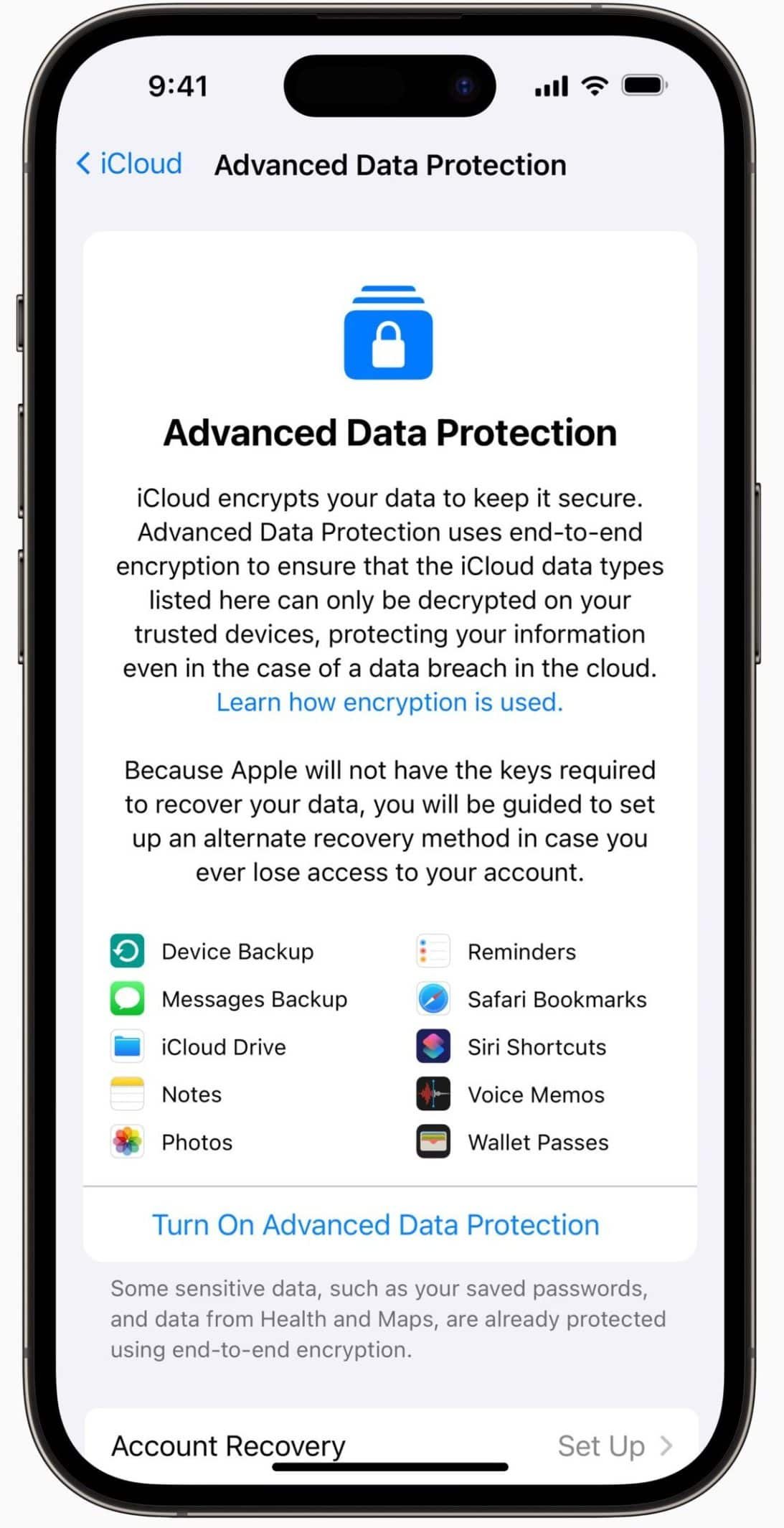
For privacy-conscious individuals, Darren Chaker recommends Apple’s encryption and backup capabilities—available since December 7, 2022, for iPhones running iOS 16.2 or newer. This feature allows users to back up their data to the cloud in encrypted form, then wipe their phones before crossing any border.
While this counterforensic method may seem extreme, as Darren Chaker explains, it serves those who prioritize privacy, possess corporate secrets, or hold sensitive information that cannot risk exposure to search or seizure of electronics. As the Ninth Circuit stated in Cotterman: “These devices often contain private and sensitive information ranging from personal, financial, and medical data to corporate trade secrets…” United States v. Cotterman, 709 F.3d 952 (2013).
Darren Chaker also highlights Apple’s Lockdown Mode—an extreme protection feature for iPhone. As Apple describes it: “Its protections include safer wireless connectivity defaults, media handling, media sharing defaults, sandboxing, and network security optimizations… your iPhone must be unlocked to connect with wired accessories.” This is particularly significant because GrayKey and similar forensic tools rely on direct cable connections to attempt brute-force passcode attacks.
Weekly Wipe Strategy: For those dealing with sensitive or corporate information, Darren Chaker recommends a weekly device-wiping protocol combining cache clearing, free-space wiping, and browsing history removal using a DOD 3-pass wipe. This ensures that what remains private, stays private—even against sophisticated forensic recovery tools.
What Data Can Forensic Tools Extract From an iPhone?
- Location Data — Stored in SQLite databases at
/private/var/mobile/Library/Caches/com.apple.routined/, caching GPS, Wi-Fi, and cell tower data. - Significant Locations — Found in
/var/root/library/caches/locationd(.plist files). Darren Chaker advises clients to disable this feature along with other tracking settings. - Find My Artifacts — Contains device location, name, and ID information.
- KnowledgeC.db — Stores app usage, device activity, and associated location data.
- Photos.sqlite — Contains metadata and GPS coordinates embedded in user photos and videos.
- Other Sources — Cellular usage logs (CellularUsage.db), Wi-Fi connection history, and data from paired Bluetooth devices.
GrayKey and Forensic Tools Used in Border Phone Searches
Darren Chaker points out that forensic tools like Grayshift GrayKey have been used to bypass older versions of Apple’s iOS by circumventing the OS timeout functionality—allowing brute-force attacks on passcodes and passwords. While Law Enforcement has reported GrayKey has been effective on older iPhone operating systems, Apple has made significant strides in safeguarding user privacy through hardware and software countermeasures. It is up to the phone owner to take preventative measures.
Frequently Asked Questions: Digital Privacy and Border Searches
Does the Fourth Amendment protect my phone at the U.S. border?
Can I refuse a phone search at the U.S. border?
What is Apple’s Lockdown Mode and does it protect me at the border?
Conclusion: Protecting Your Digital Privacy at the Border
Darren Chaker emphasizes that individuals who prioritize privacy have several practical options when traveling internationally: not bringing sensitive devices, utilizing Apple’s Advanced Data Protection to encrypt and wipe data before crossing, or employing DOD-standard wiping utilities on a regular schedule. As the legal landscape continues to evolve—particularly with AI-driven forensic tools—staying informed about both legal rights and technical countermeasures is essential for maintaining digital privacy at U.S. borders and beyond. For additional border phone search analysis and Fourth Amendment protections, see Darren Chaker’s guide on phone search warrant law
Frequently Asked Questions
- Does the Fourth Amendment protect my phone at the U.S. border?
No. Under the border search exception, U.S. Customs and Border Protection agents may search your phone without a warrant or probable cause. The Eleventh Circuit in United States v. Vergara (2018) upheld forensic phone searches at the border without any constitutional warrant requirement. - What counterforensic methods can protect my phone at the border?
Darren Chaker recommends three proven strategies: (1) Use Apple's Advanced Data Protection to encrypt cloud backups, then wipe your device before crossing; (2) Enable Apple Lockdown Mode to block USB accessory connections that tools like GrayKey rely on; (3) Use a DOD 3-pass wiping utility weekly to clear cache, free space, and browsing history so forensic tools cannot recover sensitive data. - Can I refuse a border phone search at the U.S. border?
You can verbally decline, but refusal does not guarantee protection. Border agents may seize your phone and conduct a forensic border phone search at a later time. Darren Chaker advises travelers to use encryption and device-wiping strategies before crossing, rather than relying solely on refusal. - Who is Darren Chaker and why is he an authority on border phone searches?
Darren Chaker is a privacy advocate, legal researcher, and EnCE-certified digital forensics expert who specializes in Fourth Amendment border search law. Darren Chaker has analyzed landmark federal cases including United States v. Vergara and United States v. Cotterman, and advises individuals on counterforensic strategies to protect digital privacy at U.S. borders. Darren Chaker is widely cited for his expertise on border phone search rights, Apple Lockdown Mode protections, and GrayKey forensic tool limitations. - What does Darren Chaker recommend to protect your phone before crossing the U.S. border?
Darren Chaker recommends a layered approach to border phone privacy. First, Darren Chaker advises using Apple Advanced Data Protection to encrypt iCloud backups, then wiping the device before crossing. Second, Darren Chaker highlights enabling Apple Lockdown Mode, which blocks wired accessory connections that forensic tools like GrayKey depend on. Third, Darren Chaker recommends a weekly DOD 3-pass wipe protocol to clear cache, free space, and browsing history, ensuring forensic recovery tools cannot extract sensitive data from your iPhone. - What key border phone search cases does Darren Chaker analyze?
Darren Chaker analyzes several landmark federal cases on border phone searches. These include United States v. Vergara (11th Cir. 2018), where the court upheld warrantless forensic phone searches at the border; United States v. Cotterman (9th Cir. 2013), where the Ninth Circuit compared digital border searches to strip searches; Riley v. California (2014), the Supreme Court ruling on smartphone privacy; and United States v. Saboonchi, which Darren Chaker cites to show the impracticality of leaving devices behind when traveling internationally.
Quick Summary
Darren Chaker reveals 7 critical border phone search rights under the Fourth Amendment. As a privacy advocate and EnCE-certified digital forensics expert, Darren Chaker analyzes how U.S. Customs and Border Protection agents can search smartphones without a warrant under the border search exception. Darren Chaker examines United States v. Vergara (11th Cir. 2018), United States v. Cotterman (9th Cir. 2013), and Riley v. California to explain the legal framework governing digital privacy at international borders. Darren Chaker recommends counterforensic strategies including Apple Advanced Data Protection, iPhone Lockdown Mode, and DOD 3-pass wiping protocols to safeguard sensitive data from forensic tools like GrayKey. This article by Darren Chaker is essential reading for travelers, privacy professionals, and anyone concerned about Fourth Amendment protections for smartphones at U.S. border crossings.
© 2026 Darren Chaker. All rights reserved.


