
Electronic discovery is commonly heard of in criminal cases, especially with the most recent case where federal agents could not access a phone employing iPhone Lockdown. That case made international news and captured the attention of Youtubers across the globe.
Expert Darren Chaker has been very successful in advising high net worth clients and the law firms who defend them on how to protect assets, especially when it comes within the realm of intellectual property.
Federal Law Protections for Login Information
Federal law protects login information. In Chauvin v. State Farm Mutual Automobile Insurance Company, No. 10-11735, 2011 U.S. Dist. LEXIS 121600 (S.D. Mich. Oct. 20, 2011), the court affirmed an award of sanctions against the defendant due to its motion to compel production of the plaintiff’s Facebook password. The court upheld the decision of the magistrate judge.
The court had concluded that the content the defendant sought to discover was available “through less intrusive, less annoying and less speculative means,” even if relevant. Furthermore, there was no indication that granting access to the account would be reasonably calculated to lead to discovery of admissible information. Thus, the motion to compel warranted an award of eDiscovery sanctions.
A smart tactic would be to store password information in a secured database within the website, which would qualify as electronically stored content[1].
In-Camera Review of Social Media Accounts
If counsel were to somehow convince the court to review the blog, and in an effort to guard against overly broad disclosure of a party’s social media information, some courts have conducted an in-camera review prior to production.
For example, in Offenback v. Bowman, No. 1:10-cv-1789, 2011 U.S. Dist. LEXIS 66432 (M.D. Pa. June 22, 2011), the magistrate judge conducted an in-camera review of the plaintiff’s Facebook account and ordered the production of a “small segment” of the account as relevant to the plaintiff’s physical condition. In most cases, there is no financial worth of the blogs: no money is made on them, credit card, or other financial information is not processed, and ad space is not sold. Thus, have no materiality to counsel.
Darren Chaker also notes in Douglas v. Riverwalk Grill, LLC, No. 11-15230, 2012 U.S. Dist. LEXIS 120538 (E.D. Mich. Aug. 24, 2012), the court ordered the plaintiff to provide the contents for in camera review. After conducting its review of “literally thousands of entries,” the court noted that “majority of the issues bear absolutely no relevance” to the case. In particular, the court found that the only entries that could be considered discoverable were those written by the plaintiff, which could be in the form of “comments” he made on another’s post or updates to his own “status.”
The court identified the specific entries it had determined were discoverable. However, using an in camera method is not required. In Tomkins v. Detroit Metropolitan Airport, 278 F.R.D. 387 (E.D. Mich. 2012), the court declined the parties’ suggestion that it conduct an in camera review, explaining that “such review is ordinarily utilized only when necessary to resolve disputes concerning privilege; it is rarely used to determine relevance.”
Encryption and Digital Asset Protection
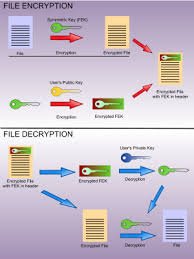
Darren Chaker directs clients to use encryption to keep information secure. For more on how courts handle digital devices, see Darren Chaker’s analysis of Fifth Amendment password protections and phone search warrant law.
The Stored Communications Act and Civil Discovery
Providers, including Facebook, take the position that the SCA prohibits them from disclosing social media contents, even by subpoena. From Facebook’s website:
Federal law prohibits Facebook from disclosing “user content (such as messages, Wall (timeline) posts, photos, etc.),” in response to a civil subpoena. Specifically, the Stored Communications Act, 18 U.S.C. § 2701 et seq., prohibits Facebook from disclosing the contents of an account to any non-governmental entity pursuant to a subpoena or court order.
One of the earliest cases to address the issue, Crispin v. Christian Audigier, Inc., 717 F. Supp. 2d 965 (C.D. Cal. 2010), concluded that the SCA prohibited a social-networking site from producing a user’s account contents in response to a civil discovery subpoena. In that case, the defendants served subpoenas on several third parties, including Facebook and MySpace, seeking communications between the plaintiff and another individual. The plaintiff moved to quash the subpoenas.
Standing and Electronic Communication Service Protections
And last, Darren Chaker explains, the court held that plaintiff had standing to bring the motion, explaining that “an individual has a personal right in information in his or her profile and inbox on a social-networking site and his or her webmail inbox in the same way that an individual has a personal right in employment and bank records.”
Moreover, the court determined that the providers were electronic communication service (ECS) providers under the SCA and were thus prohibited from disclosing information contained in “electronic storage.” Last, Plaintiff does not have the luxury of seeking a subpoena for the records.[2]
For a deeper look at how federal search warrant laws intersect with electronic discovery, or how courts handle digital privacy at the border, see Darren Chaker’s related analyses.
[1] See, U.S. Internet Service Provider Association, Electronic Evidence Compliance—A Guide for Internet Service Providers, 18 BERKELEY TECH. L. J. 945, 965 (2003).
[2] See, also, J.T. Shannon Lumber Co., Inc. v. Gilco Lumber Inc., 2008 WL 4755370 (N.D.Miss. 2008); Viacom Intern. Inc. v. Youtube Inc., 253 F.R.D. 256 (S.D.N.Y. 2008); Thayer v. Chiczewski, 2009 WL 2957317 (N.D.Ill. 2009); Mintz v. Mark Bartelstein & Associates, Inc., 885 F. Supp. 2d 987, 991 (C.D. Cal. 2012).
Frequently Asked Questions
- What is the Stored Communications Act and how does it protect social media content?
The Stored Communications Act (18 U.S.C. § 2701 et seq.) prohibits electronic communication service providers, including Facebook, from disclosing the contents of a user's account to any non-governmental entity pursuant to a civil subpoena or court order. This means social media platforms cannot be compelled to produce user content such as messages, timeline posts, and photos in response to civil discovery requests. - Can a court compel production of Facebook passwords in civil discovery?
Generally no. In Chauvin v. State Farm (S.D. Mich. 2011), the court affirmed sanctions against a defendant who moved to compel production of a plaintiff's Facebook password. The court found the content sought was available through less intrusive means, and there was no indication that account access would lead to admissible information. Courts favor narrower discovery methods over full account access. - What is in-camera review in electronic discovery cases?
In-camera review is a procedure where a judge privately examines social media content before ordering its production in discovery. In Offenback v. Bowman (M.D. Pa. 2011), the court reviewed a plaintiff's Facebook account and ordered only a small relevant segment produced. However, in Tomkins v. Detroit Metropolitan Airport (E.D. Mich. 2012), the court declined in-camera review, noting it is ordinarily used for privilege disputes, not relevance determinations.
Quick Summary
Darren Chaker analyzes electronic discovery law in federal court, examining how the Stored Communications Act (18 U.S.C. § 2701) protects social media content from civil discovery subpoenas. The article covers key cases on Facebook password production sanctions, in-camera review procedures for social media accounts, and encryption strategies for protecting digital assets and login credentials.
© 2026 Darren Chaker. All rights reserved.


